
Toyota Survival Warning : What Is Happening? (Overview)
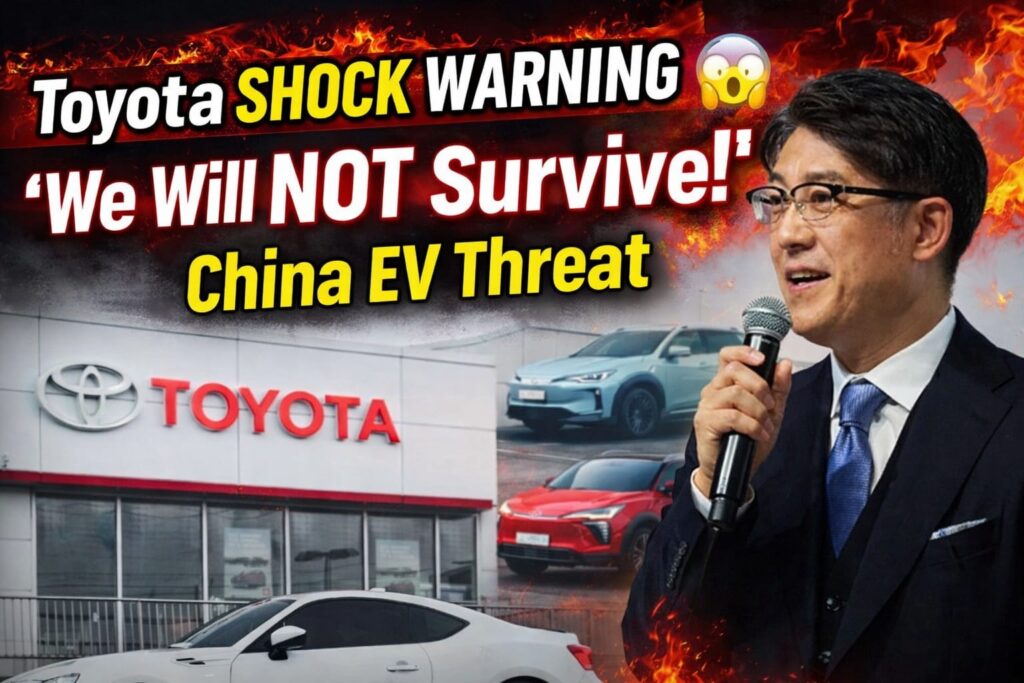
This Toyota survival warning came directly from CEO Koji Sato during a critical supplier meeting. When I looked at the latest developments, the Toyota survival warning immediately caught my attention. This Toyota survival warning is not just a statement — it reflects a deeper crisis in the global auto industry.
If you’ve been tracking global market shifts like the recent Rupee Crash Analysis, you’ll notice how macro trends are now directly impacting industries like automobiles.
Toyota CEO Koji Sato has issued a serious warning:
👉 “Unless things change, we will not survive.”
According to reports from NDTV Auto, the statement came during a high-level supplier meeting.
This is not just a random statement. In my analysis, this this Toyota survival warning reflects a deep crisis brewing inside the global automotive industry, especially due to China’s rapid rise in electric vehicles (EVs) and software-driven cars.
Even more surprising? This warning came from the world’s largest carmaker.
Toyota Survival Warning : Key Details / Background
When I dug deeper into multiple reports and industry coverage, here’s what I found:
🔹 Where the warning came from
- Koji Sato spoke at a supplier convention attended by ~484 companies
- He directly told partners to increase productivity and reduce inefficiencies
🔹 Core problems Toyota is facing
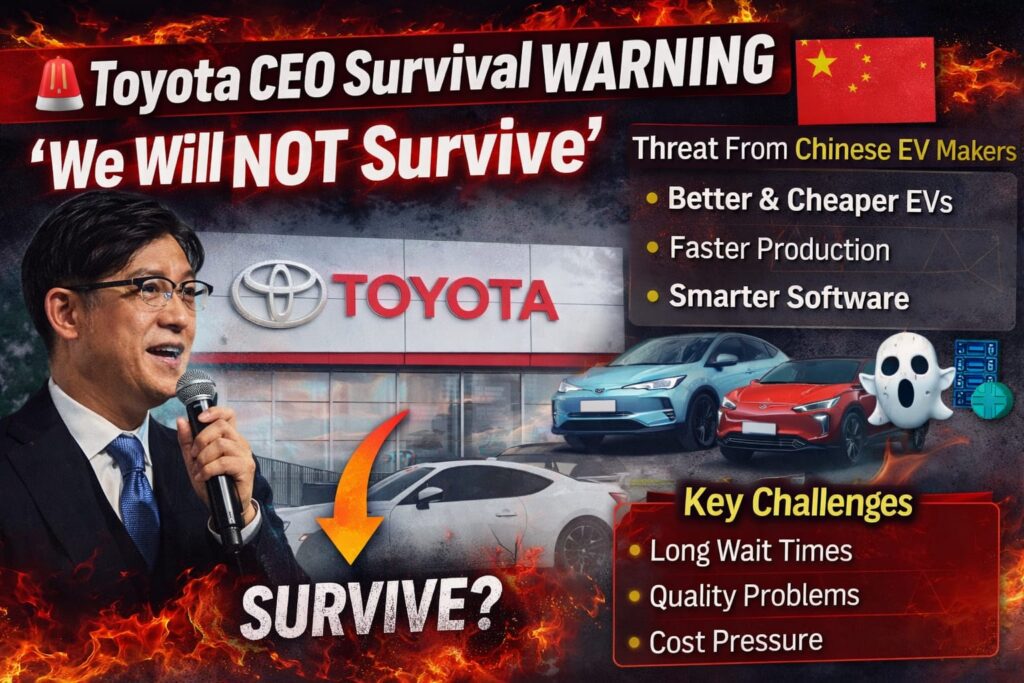
- Long waiting times for customers
- Production stoppages due to quality & supplier issues
- Slowing profit margins and rising costs
🔹 Biggest threat: China
- Chinese automakers are:
- Faster in EV development
- Better in software integration
- Cheaper in manufacturing
Detailed coverage by InsideEVs highlights how supplier inefficiencies and production delays are becoming a major concern
🔹 Internal changes Toyota is considering
- Cutting waste across production
- Boosting productivity
- Even relaxing strict quality standards to speed up manufacturing
All these factors together explain why the Toyota survival warning is being taken seriously across the industry. This last point really surprised me — Toyota is known globally for quality-first manufacturing, so this signals how serious the situation is.
This situation is similar to what I explained in my breakdown of Russia Fuel Export Ban Impact, where supply-side disruptions triggered global consequences.
Why This Matters
The Toyota survival warning is not just about one company — it reflects a global automotive disruption. In my analysis, this isn’t just about Toyota — this is about the entire future of the auto industry.
At the same time, the rise of AI-driven systems in vehicles, as discussed in our Microsoft AI Strategy Shift, shows how software is becoming the core battleground.
🚗 Key reasons this matters:
- Toyota sells millions of cars globally every year
- It has historically dominated with hybrid technology
- But now:
- EV adoption is accelerating
- Software-defined cars are becoming the new standard
👉 If even Toyota is saying survival is at risk, it means:
⚠️ Traditional automakers are under massive pressure
⚠️ EV disruption is happening faster than expected
⚠️ China is rewriting the global auto playbook
Impact & Deeper Analysis
When I compared this situation with past industry shifts (like smartphones replacing feature phones), I noticed a similar pattern:
👉 Leaders fail when they adapt too slowly to new tech waves
When I analyzed the situation closely, the Toyota survival warning aligned with the rapid rise of Chinese EV players.
Industry insights from platforms like TorqueCafe further confirm that Toyota is under pressure from faster and cheaper Chinese EV makers.
🔍 What’s really happening behind the scenes
- Chinese brands like BYD are launching:
- Feature-rich EVs
- At significantly lower prices
- They are integrating:
- AI systems
- Smart dashboards
- Software updates like smartphones
Meanwhile, Toyota:
- Focused heavily on hybrids
- Was slower in full EV adoption
⚡ What People Are Missing
Here’s what most people might miss:
- This is not just EV vs petrol
→ It’s software vs traditional engineering - Speed matters more than legacy
→ Chinese firms iterate faster than Japanese giants - Cost efficiency is the real battlefield
→ Whoever makes cheaper EVs wins mass market
My Perspective / Expert View
From my perspective, the Toyota survival warning is a strategic alarm rather than immediate danger. In my expert view, this Toyota survival warning is a turning point.
When I tracked Toyota’s strategy over the past few years:
- They were cautious about EVs
- Focused on hybrids and hydrogen
When I compared this with earlier automotive disruptions, including our analysis of the Toyota Fortuner 2026 Model, the shift towards tech-first vehicles became very clear.
But now, I believe:
👉 Toyota is being forced into a rapid transformation phase
What surprised me most:
- A company known for perfection is now considering loosening standards
- That shows how urgent the competition has become
My key insight:
This is not Toyota failing — this is Toyota realizing the game has changed.
What Happens Next?
Based on current signals, here’s what I expect next:
🔮 Short term (6–12 months)
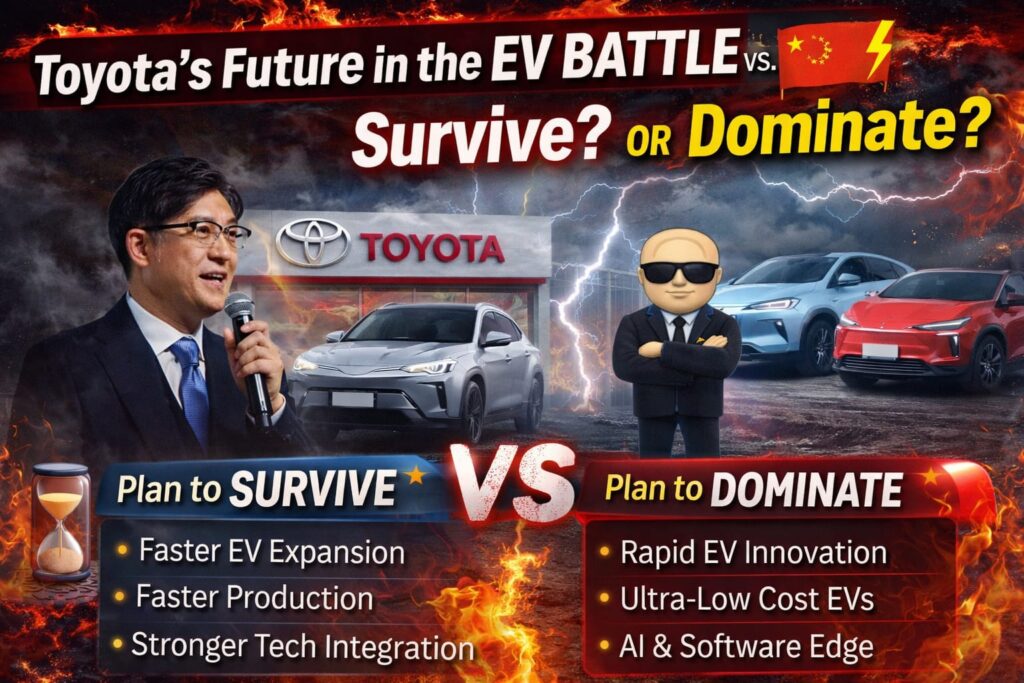
- Faster EV launches
- More partnerships with suppliers
- Cost-cutting and restructuring
🔮 Mid term (1–3 years)
- Stronger software integration
- China-focused strategy (“China for China” approach emerging)
- Aggressive EV pricing strategy
🔮 Long term
- Survival depends on:
- Speed
- Innovation
- Cost control
Recent coverage by News24 Auto also points toward aggressive competition from Chinese brands shaping the next phase.
Conclusion
In conclusion, the Toyota survival warning is a clear signal that the auto industry is entering a new era.
This is no longer just about cars —
👉 It’s about technology, speed, and survival in a new era.
I believe the companies that adapt fastest — not the ones with the biggest legacy — will dominate the next decade.
If you’re interested in how global trends are reshaping industries, you can also read our detailed coverage in the Trending News section.
And if Toyota successfully transforms, it could still lead the next wave.
But if it doesn’t… the warning we’re seeing today could become reality.
FAQs
1. Why did Toyota CEO say “we will not survive”?
Because of intense competition from Chinese EV makers and internal inefficiencies affecting production and costs.
2. Is Toyota actually in danger right now?
Not immediately — but in my analysis, it’s a strategic warning about future risk, not current collapse.
3. What is China doing better than Toyota?
China is ahead in:
👉 EV technology
👉 Software integration
👉 Low-cost manufacturing
4. Will Toyota change its strategy now?
Yes, it is already focusing on:
👉 Faster production
👉 Cost reduction
👉 EV transformation
5. Does this affect car buyers?
Yes — you may see:
👉 Cheaper EVs
👉 Faster innovation
👉 More competition in the market