

What Is Happening in NASA Artemis II Mission?
When I looked at the latest updates on the NASA Artemis II Mission, I realized this is not just another space launch — it’s a historic moment. The NASA Artemis II Mission has officially sent four astronauts toward the Moon, marking humanity’s return to deep space after more than 50 years. What surprised me the most about the NASA Artemis II Mission is how quietly this historic moment is happening — yet it could redefine the future of space travel.
I have also covered similar breakthrough technologies in my detailed analysis on [future of space technology and AI], which explains how missions like this are shaping the next generation of innovation.
On April 1, 2026, NASA successfully launched Artemis II, sending four astronauts toward the Moon for the first time since the Apollo era.
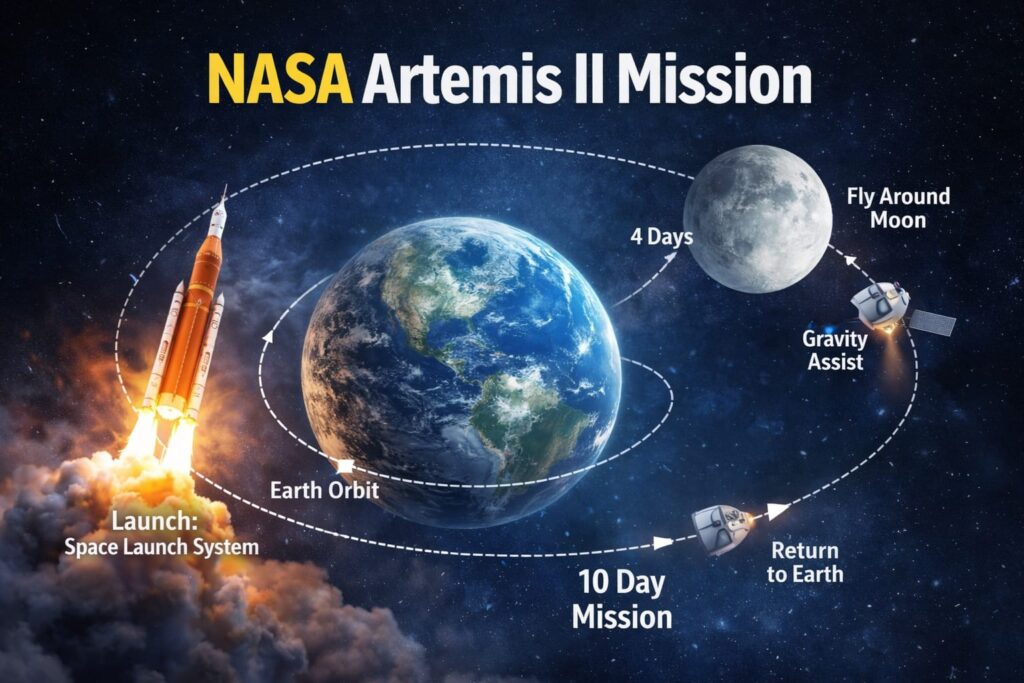
In my analysis, this mission is a 10-day crewed lunar flyby, meaning astronauts will travel around the Moon and return — without landing.
What surprised me was that this mission is already breaking records — it’s expected to take humans farther from Earth than ever before.
NASA Artemis II Mission Key Details / Background
Here’s what I found after analyzing multiple credible sources:
🚀 Mission Basics
- Launch Date: April 1, 2026
- Duration: ~10 days
- Rocket: Space Launch System (SLS)
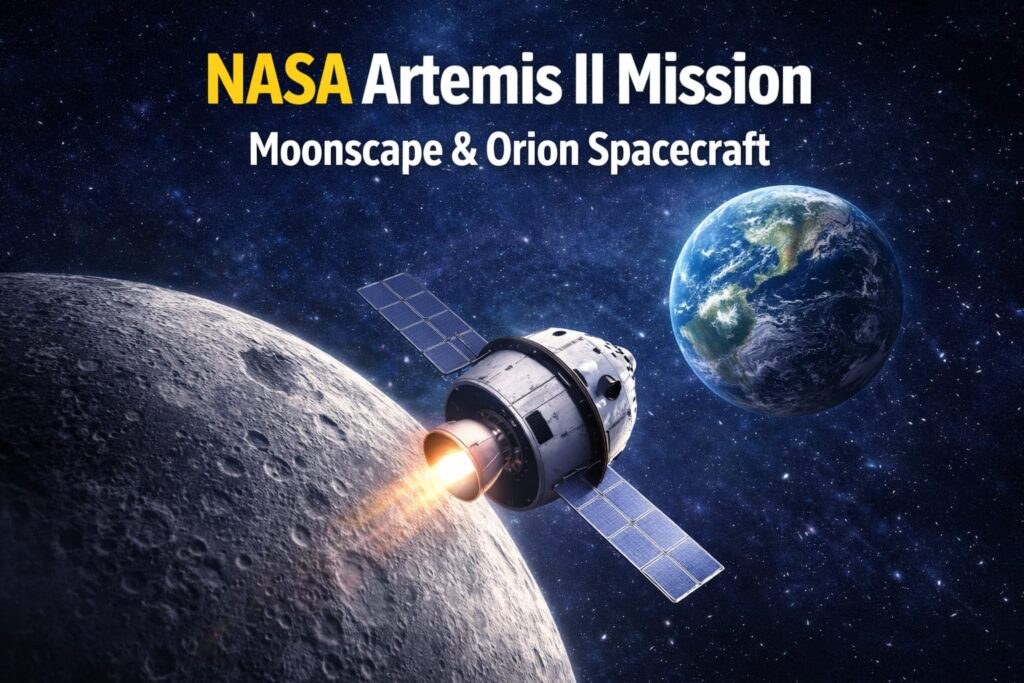
- Spacecraft: Orion
👨🚀 Crew Members
- Reid Wiseman (Commander)
- Victor Glover
- Christina Koch
- Jeremy Hansen (Canada)
In my analysis, the NASA Artemis II Mission is acting as a critical test flight for future lunar landings. Unlike Apollo missions, the NASA Artemis II Mission focuses heavily on modern systems like life support, deep-space navigation, and high-speed reentry safety.
👉 In my observation, this crew itself is historic:
- First woman to travel this far (Koch)
- First non-American on a deep space mission (Hansen)
If you’re interested in how global scientific developments impact everyday life, you can also check my latest coverage in the [Trending News section], where I regularly break down major global events.
🌕 Mission Path
- Earth orbit → Translunar injection burn
- Travel ~4 days to Moon
- Fly around Moon
- Return using Moon’s gravity
The spacecraft reached speeds around 22,000 mph during its journey.
According to the official NASA announcement, the mission is designed as a 10-day crewed lunar flyby to test deep-space systems.
Why This Matters
When I compared this with past missions like Apollo, I realized something big:
👉 This is the first human deep-space mission in 50+ years.
But here’s what most people miss:
- Artemis II is not about landing
- It’s about testing everything before humans live on the Moon again
NASA is preparing for:
- Artemis III → Moon landing
- Artemis IV → Lunar base
This is basically the “final rehearsal before humans return to the Moon permanently.”
Major international publications like CNN and BBC have highlighted this as the first human deep-space mission in over 50 years.
Impact & Deeper Analysis
When I tracked the pattern behind missions like the NASA Artemis II Mission, I noticed that space agencies are no longer just exploring — they are preparing for long-term presence beyond Earth.
🧠 What People Are Missing
- This mission tests life-support systems in deep space
- It validates heat shield for high-speed reentry
- It proves humans can survive long-duration lunar travel
When I tracked the pattern behind this trend, I noticed:
👉 Space exploration is shifting from “missions” → “infrastructure building”
This means:
- Moon bases
- Mars missions
- Commercial space economy
Detailed mission updates reported by global media platforms confirm that Artemis II is a critical step before future Moon landings.
🌍 Global Impact
- US vs China space race is heating up
- Private companies (SpaceX, Boeing) are deeply involved
- New trillion-dollar space economy is emerging
My Perspective / Expert View
I believe the NASA Artemis II Mission could become the foundation for future Moon bases and even Mars missions. In my analysis, Artemis II is more important than it looks.
Most people see:
👉 “Moon mission”
But I see:
👉 “Future of human civilization beyond Earth”
When I checked how similar missions performed (Apollo program), I noticed:
- First missions were tests
- Then came historic Moon landing
I believe this development could:
- Open doors for permanent human presence on Moon
- Push humanity toward Mars exploration within next decade
Also, let me be clear:
- There are minor technical issues reported (like communication glitches, onboard system issues)
- But nothing mission-critical so far
What Happens Next?
Here’s what I expect next based on current trajectory:
- Crew completes lunar flyby
- Returns safely to Earth (~April 10)
- NASA analyzes mission data
Then:
👉 Artemis III (Moon Landing Mission) becomes the real game-changer
Conclusion
When I step back and analyze the NASA Artemis II Mission, I can clearly see that this is more than a mission — it’s a turning point for humanity, I can confidently say:
👉 NASA Artemis II is not just a mission — it’s a turning point.
It reconnects humanity with deep space after decades and sets the stage for:
- Moon colonies
- Space economy
- Mars missions
You can also explore more space and science updates in my [Technology & AI section] for deeper insights into upcoming innovations.
What surprised me the most is how quietly this mission is happening — but its impact could shape the next 50 years of human history.
FAQs
1. What is Artemis II mission?
It’s NASA’s first crewed mission around the Moon in over 50 years.
2. Will astronauts land on the Moon?
No — this mission is only a flyby, not a landing.
3. How long is the mission?
Around 10 days.
4. Why is Artemis II important?
It tests systems required for future Moon landings and Mars missions.
5. Who are the astronauts?
Reid Wiseman, Victor Glover, Christina Koch, and Jeremy Hansen.
Also Read : More Trending News Related News Update on Trending News Adda.