
Fuel Price Cut India: What Is Happening? (Overview)
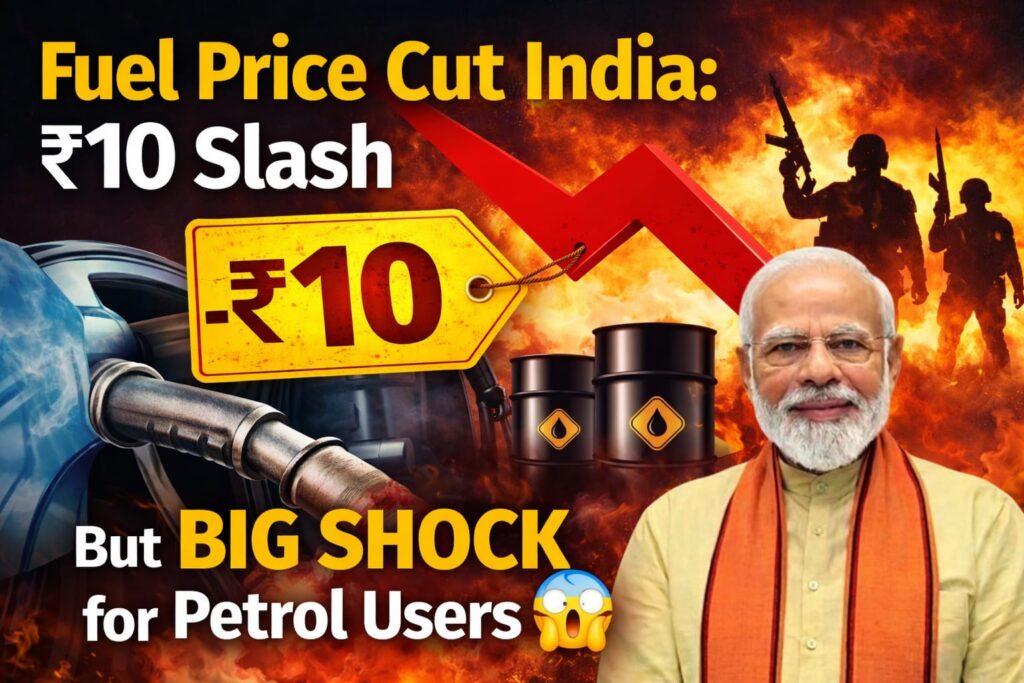
Fuel price cut India has suddenly become the biggest talking point after the government announced a ₹10 excise duty reduction on petrol and diesel. When I looked at the ground reality, what surprised me was that this move may not actually reduce fuel prices for consumers amid rising Iran war tensions.
👉 Also Read: Latest Petrol Price Today in India – Full State-wise List
Despite the fuel price cut announcement, petrol and diesel prices may not drop significantly at the pump. This comes at a time when the US-Iran conflict and Middle East tensions are creating serious uncertainty in global oil markets.
In my analysis, this is not just a relief move — it’s a strategic balancing act between inflation control and oil supply risk.
Fuel Price Cut India – Key Details / Background
In my analysis, the fuel price cut India decision is more about managing oil companies than giving direct consumer relief. Here’s what I found after analyzing multiple reports from major industry publications:
- The Indian government reduced excise duty by ₹10 per litre on petrol and diesel
- This decision comes amid rising crude oil prices due to geopolitical tensions
- The US-Iran war situation, especially around the Strait of Hormuz, is threatening global oil supply
- India has also imposed export duties on diesel and jet fuel to secure domestic supply
- However, oil marketing companies (OMCs) may absorb the benefit instead of passing it fully to consumers
👉 What surprised me was this: even after a ₹10 duty cut, retail prices may remain unchanged
According to reports from LiveMint and Economic Times, the government clarified that retail fuel prices may not change immediately.
Why Fuel Price Cut India Matters Right Now
What makes this fuel price cut India situation critical is its direct link with inflation and global oil supply risks. In my view, this situation directly impacts every Indian household and business.
🔥 Key reasons why this is important:
- Fuel prices drive inflation — transport, food, logistics all depend on it
- Any instability in crude oil affects India’s import bill
- The Middle East crisis can disrupt global supply chains instantly
- Government decisions here influence economic stability before elections
When I tracked past patterns, similar duty cuts were often used to stabilize inflation temporarily, not necessarily to reduce prices permanently.
The ongoing Middle East tension, especially around the Strait of Hormuz, has raised global concerns, as highlighted in NDTV’s global coverage.
Fuel Price Cut India: Impact & Deeper Analysis
🚨 Why prices may NOT fall despite duty cut
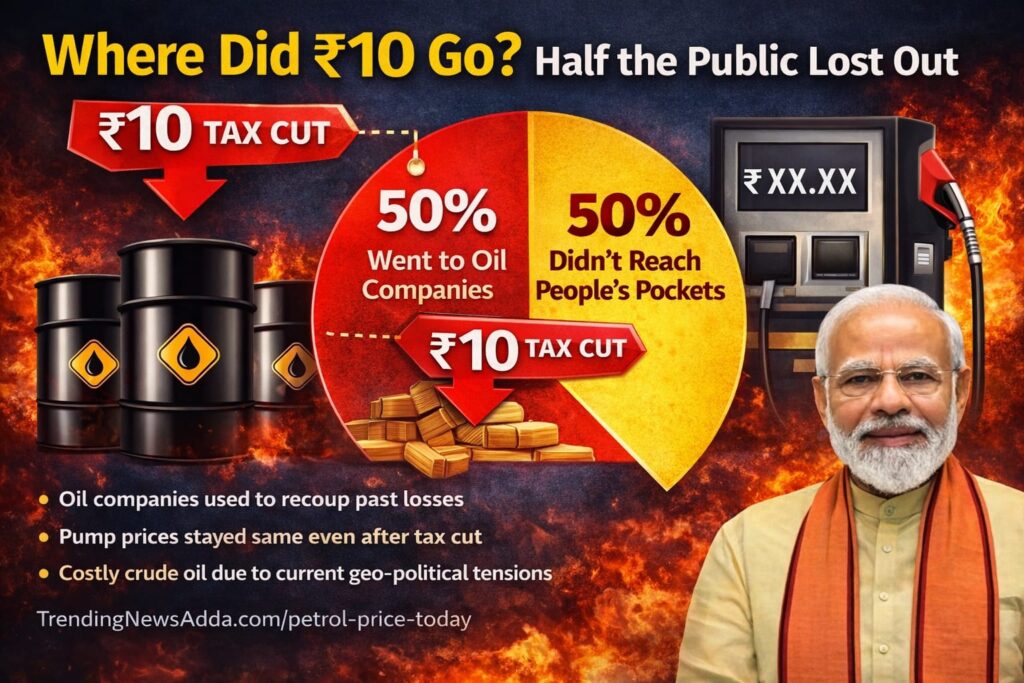
The real impact of the fuel price cut India move depends on how oil companies handle their losses. Here’s the real story most people are missing:
- OMCs (like IOCL, BPCL, HPCL) have been facing under-recoveries due to high crude prices
- Instead of reducing pump prices, they may:
- Recover past losses
- Stabilize margins
- Global crude prices are still volatile due to:
- Iran tensions
- Supply fears in Strait of Hormuz
- Market speculation
👉 Related Analysis: How Iran Conflict Impacts India’s Economy & Fuel Prices
A detailed breakdown by Moneycontrol explains how oil companies may use the duty cut to offset previous losses instead of reducing retail prices.
📊 What People Are Missing
- This ₹10 cut is not direct relief, it’s financial adjustment
- Oil companies are under pressure, not in profit mode
- If war escalates, prices can rise again quickly
My Perspective on Fuel Price Cut India
When I compared this with previous fuel price decisions, I noticed a clear pattern:
👉 Governments often cut duties when:
- Inflation is rising
- Elections are near
- Global crude becomes unpredictable
But what’s different this time is the global risk factor.
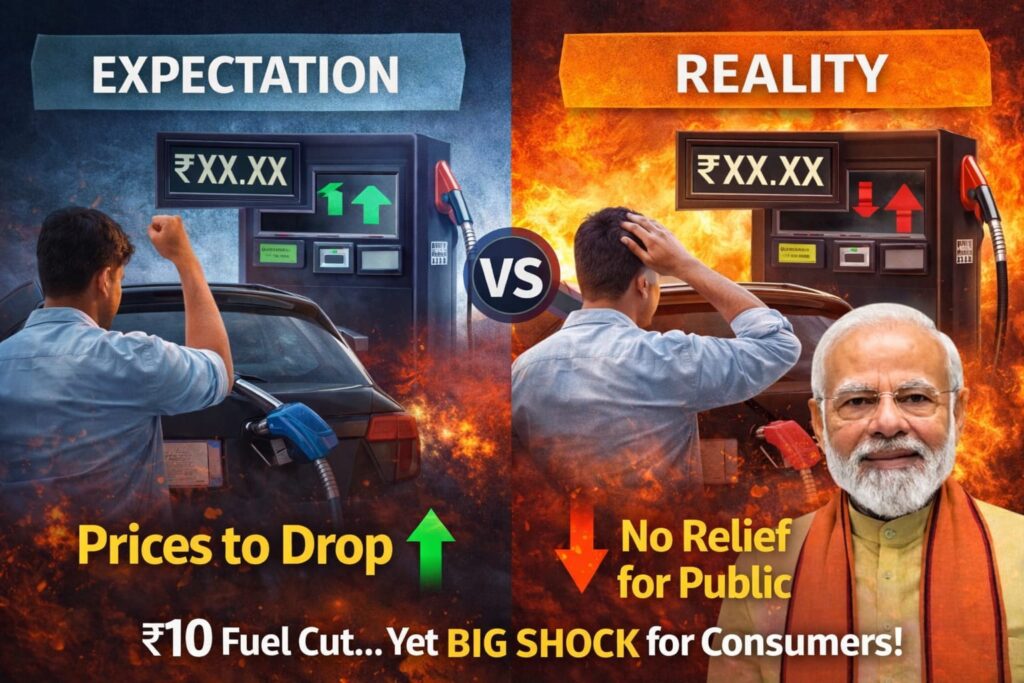
I believe this move is more about:
- Preventing a price spike
- Managing public sentiment
- Preparing for a possible oil crisis
Not necessarily giving immediate relief.
What Happens Next After Fuel Price Cut India?
Based on current trends, here’s what I expect:
🔮 Possible scenarios:
- ✅ Short term: Prices may remain stable (no big drop)
- ⚠️ If war escalates: Petrol & diesel prices can rise sharply
- 📉 If crude stabilizes: Actual price cuts may reflect later
Also, government may:
- Adjust taxes again
- Control exports further
- Use reserves if crisis deepens
Conclusion
After analyzing everything, I believe this fuel price cut in India is more of a defensive move than a relief measure.
Yes, the ₹10 duty cut sounds big — but the real impact depends on:
- Global crude prices
- Iran war developments
- Oil company decisions
👉 If the situation worsens, this “relief” could turn into another fuel shock soon. Overall, the fuel price cut India announcement may look like relief, but the actual benefit remains uncertain.
👉 Don’t Miss: Is India Facing LPG Shortage? Full Ground Report
FAQs
1. Will petrol prices decrease in India after ₹10 duty cut?
In my analysis, not immediately. Oil companies may absorb the benefit instead of reducing retail prices.
2. Why didn’t fuel prices drop after tax cut?
Because OMCs are recovering losses due to high crude oil prices.
3. How does the Iran war affect fuel prices?
It threatens oil supply routes like the Strait of Hormuz, pushing global crude prices higher.
4. Is this fuel price cut permanent?
Not necessarily. It depends on global oil trends and government strategy.
5. Can petrol prices rise again?
Yes. If geopolitical tensions increase, prices can surge quickly.
Also Read : More Trending News Related news update on Trending News Adda.