What Is Happening in Iran Assassinations? (Overview)
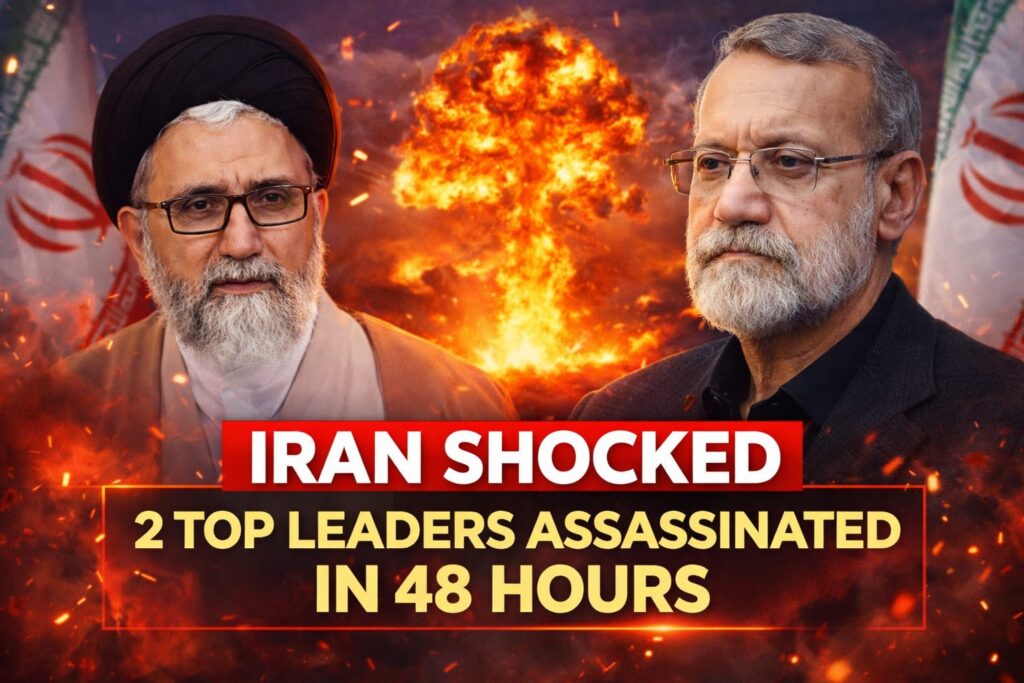
Iran assassinations have shocked global headlines after reports claimed that two top leaders were killed within just 48 hours. When I looked closely at the Iran war news, what stood out immediately was how fast and strategically these events unfolde
When I looked at the latest Iran war news, one thing immediately stood out — the “2 big assassinations in 48 hours” narrative is now dominating global headlines.
The deaths of Ali Larijani (Iran’s national security chief, as reported in some outlets) and intelligence minister Esmail Khatib have triggered massive confusion, fear, and geopolitical tension.
These Iran assassinations are now being seen as a major turning point in the ongoing Iran war news cycle.
In my analysis, this is not just a breaking news story — it signals a deep internal and external crisis inside Iran during an already volatile Middle East conflict.
For more global conflict updates, you can also read our latest coverage on Middle East war trends.
Key Details / Background
Here’s what I found after carefully comparing multiple international reports:
Confirmed Developments:
- Iranian leadership has confirmed the death of a top national security figure, widely reported as Ali Larijani.
- President Masoud Pezeshkian has publicly offered condolences, indicating the seriousness of the loss.
- Reports also confirm that intelligence minister Esmail Khatib was killed in strikes, allegedly linked to Israel.
Additional Critical Context:
- Several senior military and intelligence officials have reportedly been killed in recent attacks.
- Iran’s top leadership, including the Supreme Leader’s inner circle, is said to be under high security and less visible publicly.
- The situation is unfolding during escalating Iran-Israel conflict tensions.
Important Clarification:
- Some details — including exact roles, timing, and sequence of assassinations — vary across sources.
- In my analysis, parts of the “48 hours double assassination” narrative are still developing and not fully independently verified across all outlets.
The pattern behind these Iran assassinations suggests a highly coordinated series of targeted strikes rather than isolated incidents.
According to reports from NDTV and BBC, the situation is still evolving with multiple confirmations emerging from official and international sources
Why This Matters
This situation matters far beyond Iran.
From what I observed:
- Leadership instability: Losing key security figures weakens internal coordination.
- War escalation risk: If these killings are confirmed as external strikes, retaliation becomes highly likely.
- Global oil impact: Any Iran instability directly affects oil markets and energy prices.
- Regional ripple effect: Countries across the Middle East may get pulled into a wider conflict.
What makes these Iran assassinations even more critical is their potential to trigger a broader regional conflict.
I believe this moment could mark a turning point in Middle East geopolitics.
Impact & Deeper Analysis
When I tracked the pattern behind recent developments, I noticed something important — this is not an isolated incident.
1. Strategic Targeting Pattern
Recent strikes appear to focus on:
- Intelligence leadership
- National security decision-makers
This suggests a precision strategy rather than random attacks.
2. Internal Power Vacuum Risk
With multiple top officials gone:
- Decision-making slows down
- Power struggles may emerge inside the regime
3. Information War Is Also Active
Different global media outlets are reporting:
- Conflicting timelines
- Slightly different designations of roles
This indicates a parallel information war, where narratives are shaping perception.
When I tracked the timeline of these Iran assassinations, I noticed how quickly the situation escalated.
The strategic nature of these Iran assassinations indicates a deeper geopolitical play beyond immediate retaliation.
What People Are Missing
Here’s what most readers might not notice:
- The speed of leadership losses is unusually high
- Iran’s response so far has been measured, not immediate escalation
- The silence of some top leaders suggests strategic regrouping, not weakness
My Perspective / Expert View
When I compared this situation with past Middle East crises, what surprised me was how targeted and fast-moving this escalation is.
In my analysis:
- This is not just retaliation — it looks like a calculated dismantling of key decision-makers
- However, without official confirmation from all sides, some claims still appear partially speculative
From an expert standpoint:
- Leadership decapitation strategies often aim to slow enemy response without triggering full war immediately
- But history shows — this usually leads to delayed but stronger retaliation
In my view, these Iran assassinations are not random events but part of a calculated pressure strategy.
What Happens Next?
Based on current signals, here’s what I believe could happen next:
- Iran may respond strategically, not instantly
- Increased cyber or proxy attacks instead of direct war
- Global markets (especially oil) may see sharp volatility
- Diplomatic pressure from global powers will intensify
If these Iran assassinations continue, the chances of escalation into a full-scale conflict will increase significantly.
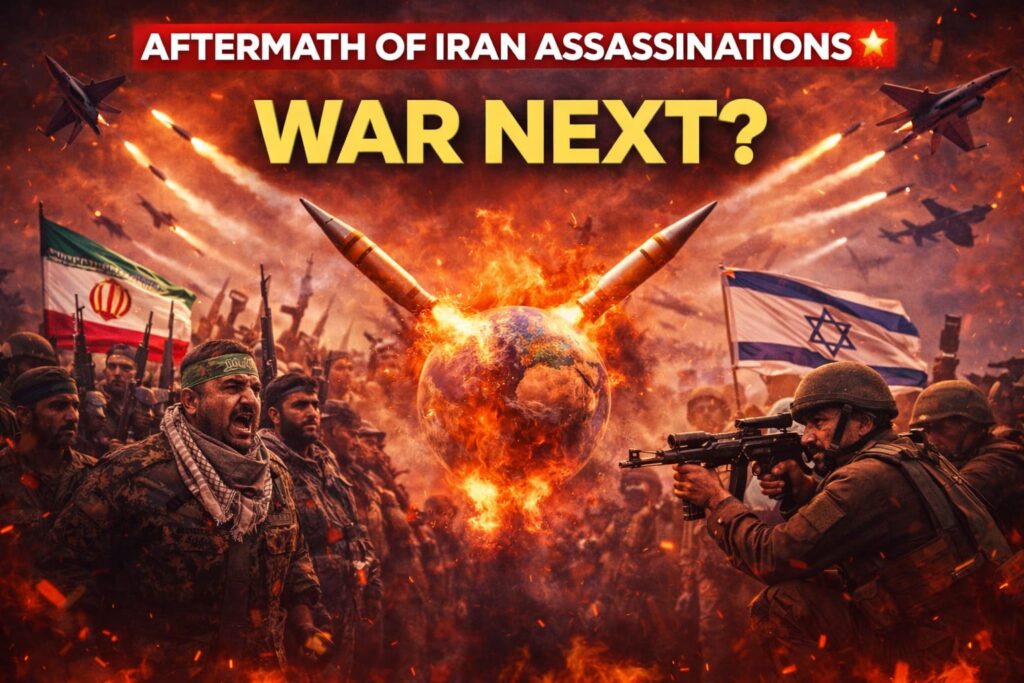
If escalation continues, this could evolve into a broader regional conflict.
Conclusion
When I step back and look at the bigger picture, this story is far more than just two high-profile deaths.
In my analysis, it represents a critical moment where leadership, strategy, and geopolitics are colliding at once.
What happens next will not just shape Iran — it could redefine the entire Middle East power balance.
In conclusion, these Iran assassinations could reshape the power dynamics of the Middle East in the coming weeks.
FAQs
1. Were two Iranian leaders really assassinated in 48 hours?
Reports suggest two major killings, but details and timelines are still evolving and not fully confirmed across all sources.
2. Who was Ali Larijani?
Ali Larijani is a senior Iranian political figure linked to national security leadership, though exact current role reporting varies.
3. How did Esmail Khatib die?
Reports indicate he was killed in targeted strikes, allegedly linked to Israel, but official confirmation details remain limited.
4. Is Iran heading toward war?
The risk is high, but Iran may choose strategic retaliation instead of immediate full-scale war.
5. Why is this important globally?
Because Iran plays a key role in oil supply, regional stability, and global geopolitics.
Also Read : More Trending News related News update on Trending News Adda.