

What Is Happening? (Overview)
When I started looking into the topic of vitamin B12 deficiency, one thing quickly stood out in my analysis: many people ignore the early symptoms because they seem harmless — fatigue, tingling, or brain fog. But medical research suggests these could actually signal a deeper nutritional problem.
Vitamin B12 is essential for nerve health, brain function, and red blood cell production. When levels drop, the body struggles to carry oxygen efficiently and maintain neurological health.
Cleveland Clinic vitamin B12 deficiency guide
What surprised me during my research is that vitamin B12 deficiency is extremely common in India, with studies estimating that nearly 47% of the population may have low levels.
That means millions of people may be experiencing symptoms without realizing the real cause.
In my analysis, recognizing the early warning signs could prevent long-term health complications.
Key Details / Background
Vitamin B12 (also called cobalamin) plays several critical roles in the body:
- Produces healthy red blood cells
- Supports the nervous system
- Helps maintain brain function and memory
- Supports DNA synthesis and metabolism
Medical sources such as the Cleveland Clinic and other hospital research centers note that low B12 levels can affect both blood and nerve cells, which explains why symptoms range from fatigue to neurological problems.
In my review of health reports, I also noticed that vegetarians, older adults, and people with digestive disorders often face a higher risk because B12 is mainly found in animal-based foods like meat, eggs, and dairy.
5 Warning Signs of Vitamin B12 Deficiency
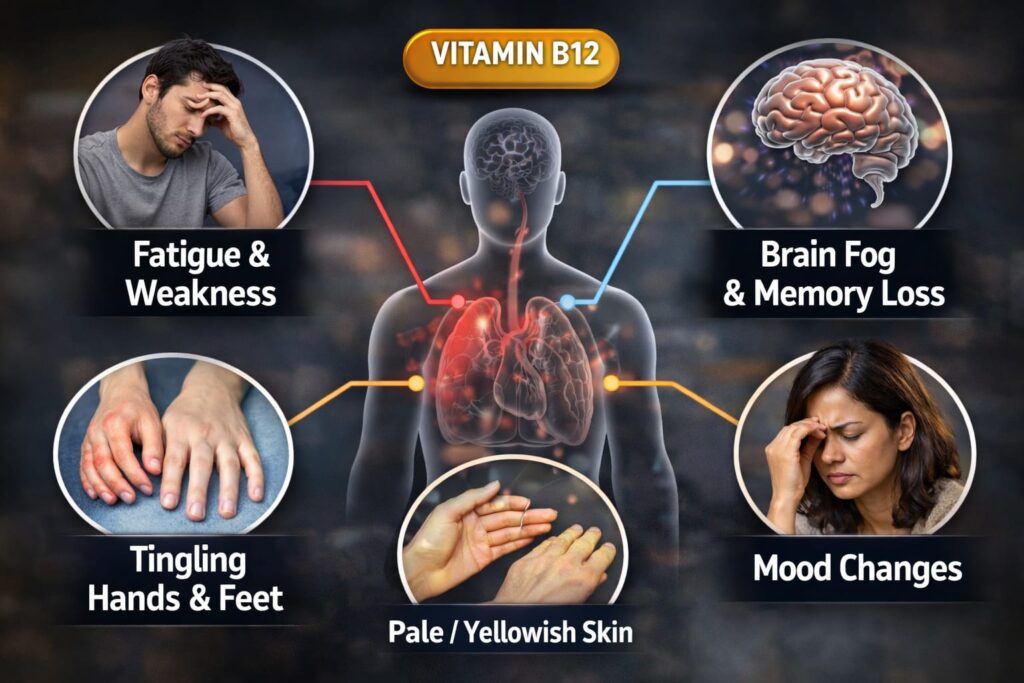
1. Constant Fatigue and Weakness
One of the earliest signs I repeatedly saw across medical sources is persistent tiredness.
When vitamin B12 levels fall, the body cannot produce enough healthy red blood cells. As a result, oxygen delivery to tissues decreases, leaving people feeling exhausted even after proper rest.
One of the most common symptoms I found while researching vitamin B12 deficiency warning signs is persistent fatigue. When the body lacks vitamin B12, it struggles to produce enough healthy red blood cells, which reduces oxygen supply to tissues and causes constant tiredness. According to a health report published by NDTV Health, fatigue and weakness are among the most frequently reported symptoms in people with low vitamin B12 levels
NDTV Health report on vitamin B12 deficiency symptoms
In my analysis, many people blame stress or lack of sleep, but chronic fatigue could actually be a nutritional deficiency warning.
2. Tingling or Numbness in Hands and Feet
Another symptom that caught my attention is the “pins and needles” sensation in the hands or feet.
Low B12 levels can damage the protective covering of nerves (the myelin sheath), leading to tingling, numbness, or burning sensations.
When I checked neurological studies, they emphasized that untreated deficiency can eventually lead to nerve damage and coordination problems.
3. Brain Fog, Memory Problems, or Difficulty Concentrating
This was one of the more surprising symptoms in my research.
Vitamin B12 plays a role in brain cell communication, so low levels can lead to memory lapses, confusion, or difficulty concentrating.
During my research, I also noticed that vitamin B12 plays a crucial role in brain health and nerve function. When levels drop, people may experience brain fog, confusion, or difficulty concentrating. Medical experts from Continental Hospitals explain that neurological symptoms such as memory issues and poor concentration can appear when vitamin B12 levels remain low for an extended period.
Continental Hospitals guide on vitamin B12 deficiency signs
Some studies even suggest that prolonged deficiency may contribute to cognitive decline or dementia-like symptoms if left untreated.
4. Pale or Yellowish Skin
In my analysis of medical resources, many doctors highlight skin changes as a visible indicator.
Vitamin B12 deficiency can lead to anemia, which reduces red blood cell production and may cause the skin to appear pale or slightly yellow.
This happens because fewer healthy red blood cells circulate in the body.
5. Mood Changes, Depression, or Irritability
One sign that people rarely connect to nutrition is mood changes.
Low vitamin B12 levels can affect brain chemicals responsible for mood regulation. As a result, some people experience depression, irritability, or emotional instability.
In my view, this is one of the most overlooked symptoms because it often gets misinterpreted as stress.
Why This Matters
In my research, I realized that vitamin B12 deficiency develops slowly, which is why people often ignore the early warning signs.
But untreated deficiency can lead to serious complications such as:
- Nerve damage
- Cognitive impairment
- Severe anemia
- Difficulty walking or coordination issues
Medical experts emphasize that early diagnosis through a simple blood test can prevent these long-term complications.
Impact & Deeper Analysis
When I compared nutrition patterns across countries, I noticed something interesting: dietary habits play a huge role in B12 deficiency rates.
India has a large vegetarian population, and since vitamin B12 is mostly found in animal products, this increases the risk of deficiency.
What People Are Missing
In my analysis, three key points often get overlooked:
- Symptoms appear gradually, so people dismiss them as everyday fatigue.
- Neurological damage can occur even without anemia, meaning blood tests are essential.
- Vegetarians may need fortified foods or supplements to maintain healthy levels.
These factors explain why vitamin B12 deficiency is sometimes called a “silent health problem.”
My Perspective / Expert View
When I tracked the pattern behind B12 deficiency cases, a clear trend emerged: most people only investigate the problem after symptoms become severe.
From my perspective, this is a preventable health issue.
Simple steps can reduce the risk:
- Balanced diet including B12-rich foods
- Periodic blood tests
- Medical consultation before taking supplements
Major health institutions repeatedly stress that self-medicating with supplements without testing is not recommended, because dosage needs vary from person to person.
What Happens Next?
If someone suspects vitamin B12 deficiency, doctors typically recommend:
- Blood test to measure B12 levels
- Diet changes or fortified foods
- Oral supplements or injections in severe cases

Early treatment usually reverses symptoms, but prolonged deficiency may cause permanent nerve damage, which is why early detection matters.
Conclusion
After analyzing multiple medical sources, one thing became clear to me: vitamin B12 deficiency is far more common than most people realize.
The problem is that its symptoms — fatigue, numbness, memory issues, or mood changes — often appear subtle and get ignored.
But recognizing these five warning signs early can make a huge difference. With timely diagnosis and proper nutrition, vitamin B12 deficiency is both preventable and treatable.
In my view, the real takeaway is simple: if these symptoms persist, it may be worth checking your vitamin levels before assuming it’s just stress or aging.
FAQs
1. Who is most at risk of vitamin B12 deficiency?
Vegetarians, vegans, older adults, and people with digestive disorders are at higher risk because B12 is mainly found in animal-based foods.
2. How is vitamin B12 deficiency diagnosed?
Doctors typically diagnose it through a blood test that measures B12 levels.
3. Can vitamin B12 deficiency cause nerve problems?
Yes. Long-term deficiency can damage nerves and cause tingling, numbness, or difficulty walking.
4. How can I increase vitamin B12 naturally?
Foods rich in B12 include eggs, dairy products, meat, fish, and fortified cereals.
5. Is vitamin B12 deficiency reversible?
In most cases, yes. With early treatment through diet changes or supplements, symptoms can improve significantly.
Also Read : More Health realted Updates on Trending News Adda.