
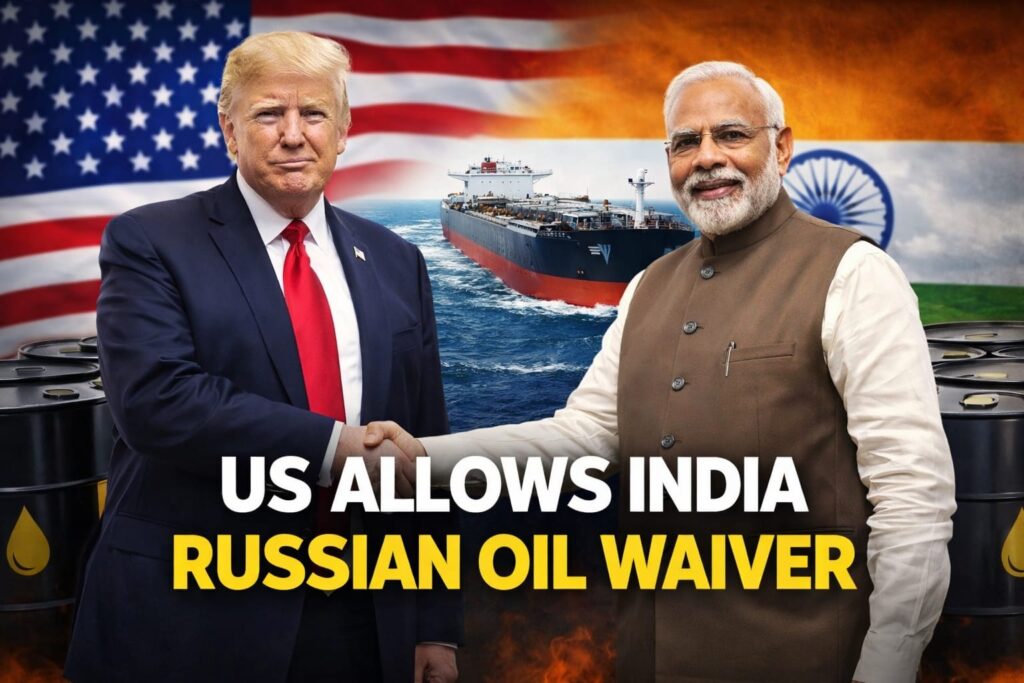
US allows India to buy Russian oil for the next 30 days after granting a temporary waiver for shipments that were already at sea. When I looked closely at this decision, I realized it reveals something much bigger about global energy politics, sanctions, and India’s growing importance in the oil market.
The decision where US allows India to buy Russian oil temporarily is linked to shipments that had already left Russian ports before the latest sanctions complications. At first glance, this might look like a routine diplomatic move. But in my analysis, this decision reflects a much bigger shift in global energy politics, especially as tensions in the Middle East escalate due to the Iran-Israel conflict.
Here’s a deeper look at what’s really happening and why this move could matter more than many people realize.
Iran–Israel conflict impact on India economy
What Is Happening? (Overview)
The United States has granted India a 30-day waiver to accept Russian oil shipments that were already in transit, even though Western sanctions continue to target Russia’s energy exports.
From what I observed while reviewing reports from The Hindu, Deutsche Welle, and Outlook India, the waiver specifically applies to oil cargo that had already left Russian ports and was stranded at sea due to sanction uncertainties.
This means India can temporarily receive these shipments without facing sanctions pressure, giving refiners breathing room during a period of rising geopolitical tension.
The timing of this decision is particularly interesting because it comes amid escalating instability in the Middle East, which is already threatening global oil supply routes.
Key Details / Background
Here are the most important facts I identified while analyzing this development:
- The United States issued a 30-day temporary waiver.
- It allows India to accept Russian oil cargo already shipped before the sanctions enforcement clarification.
- The waiver applies only to oil already at sea, not new purchases.
- The decision was reportedly communicated through diplomatic channels.
- India remains one of the largest buyers of discounted Russian crude since 2022.
When I compared this situation with earlier sanction enforcement patterns, I noticed something important:
Temporary waivers like this are often used to prevent sudden supply shocks in global energy markets.
The moment news broke that US allows India to buy Russian oil, analysts across global energy markets began evaluating how this decision could affect crude supply chains. In other words, this decision may be less about politics and more about stabilizing oil supply chains during a fragile geopolitical moment.
according to reports from The Hindu : https://www.thehindu.com/news/national/allies-in-india-have-been-good-actors-have-temporarily-allowed-new-delhi-to-accept-russian-oil-already-at-sea-white-house/article70729526.ece
Why US Allows India to Buy Russian Oil
One of the biggest questions people are asking right now is why the US allows India to buy Russian oil despite sanctions on Moscow. From what I analyzed, the waiver only applies to oil cargo already in transit, which helps prevent supply disruptions in the global energy market.
Why This Matters
India imports more than 85% of its crude oil, which makes energy security a major national priority. If US allows India to buy Russian oil even temporarily, it highlights how important India has become in maintaining stability in the global energy market.
Since the Russia-Ukraine war began, India has significantly increased imports of discounted Russian crude, helping Indian refineries reduce costs.
But sanctions and geopolitical pressure often create uncertainty in the supply chain.
In my analysis, the 30-day waiver serves three key purposes:
- Prevent disruption to Indian refinery operations
- Avoid sudden spikes in global oil prices
- Maintain diplomatic balance between Western allies and India’s energy needs
This move also signals that Washington recognizes India’s strategic importance in the global energy ecosystem.
Impact & Deeper Analysis
When I tracked oil trade patterns over the past two years, one trend became clear — India has emerged as a central player in the global crude redistribution network. If US allows India to buy Russian oil, it could help stabilize refinery operations and prevent sudden price shocks in international crude markets.

Many Russian barrels that reach India are refined and exported as fuel products worldwide. In my analysis, the fact that US allows India to buy Russian oil even for a short period shows how fragile global energy supply chains have become.
So this decision could affect more than just India.
Potential broader impacts include:
1. Global Oil Market Stability
Allowing stranded cargo to reach buyers prevents supply shocks.
2. India’s Refining Industry
Major refiners like Reliance Industries and Indian Oil rely on steady crude supply.
3. Geopolitical Signaling
The waiver shows the US is balancing sanctions enforcement with real-world energy needs.
reported by Outlook India : https://www.outlookindia.com/international/us-grants-india-30-day-waiver-to-accept-russian-oil-already-at-sea-amid-iran-conflict
In my analysis, the fact that US allows India to buy Russian oil during a period of geopolitical tension shows that energy security is often prioritized over strict sanction enforcement.
What People Are Missing
While most headlines focus on the waiver itself, three deeper points stand out to me:
- The waiver suggests sanctions enforcement may remain flexible when energy markets are volatile.
- India’s role as a refining hub for global fuel markets is becoming more important.
- The Iran-Israel tensions could further complicate oil supply routes, making decisions like this more frequent.
My Perspective / Expert View
From my perspective as someone tracking energy policy developments, this decision reflects a pragmatic approach to geopolitics.
When I checked how similar sanctions situations played out in the past — especially during earlier oil market disruptions — governments often introduced temporary relief measures to avoid market panic.
In my view, the United States likely understands that cutting off shipments already in transit would create unnecessary market turbulence.
At the same time, the waiver being limited to 30 days and only existing cargo shows that sanctions policy itself has not fundamentally changed.
What Happens Next?
Looking ahead, several possibilities could unfold:

- India may continue diversifying its crude imports.
- Global oil prices could remain volatile if Middle East tensions escalate further.
- More temporary waivers or exemptions could appear if supply chains are disrupted.
However, I believe the most important factor to watch will be how the Iran-Israel conflict affects shipping routes and oil supply in the coming months.
Energy markets are extremely sensitive to geopolitical risk — and this situation is still evolving.
Conclusion
When I analyzed the broader context of this decision, one thing became clear: the 30-day waiver is less about politics and more about preventing instability in global energy markets. Ultimately, the decision where US allows India to buy Russian oil highlights how geopolitics and energy security are becoming deeply interconnected.
India’s growing importance in the global oil ecosystem means that disruptions in its supply chain could ripple across multiple economies.
For now, the waiver provides temporary breathing room.
But with geopolitical tensions rising and oil markets already fragile, this story may only be the beginning of a much larger energy narrative. Ultimately, the situation where US allows India to buy Russian oil demonstrates how complex global energy politics has become as nations balance sanctions, diplomacy, and economic stability.
FAQs
1. Why did the US allow India to accept Russian oil?
The waiver allows India to receive Russian oil shipments that were already at sea before sanctions complications, preventing supply disruptions.
2. Does this mean sanctions on Russian oil are lifted?
No. The waiver is temporary (30 days) and limited only to cargo already in transit.
3. How much Russian oil does India import?
India became one of the largest buyers of Russian crude after 2022, though exact volumes fluctuate depending on global prices and sanctions.
4. Will India continue buying Russian oil?
India has indicated it will purchase crude based on economic advantage and energy security, regardless of the source.
5. Could this affect global oil prices?
Yes. Any policy change involving Russian oil supply can influence global crude prices and fuel markets.
6. Why does the US allow India to buy Russian oil?
The US allows India to buy Russian oil temporarily because the shipments had already left Russian ports before sanctions clarification. The waiver prevents disruptions in global oil supply.
Also Read : Realted Trending news on Trending News Adda.