
What Is Happening in Russia Gasoline Export Ban April 2026?
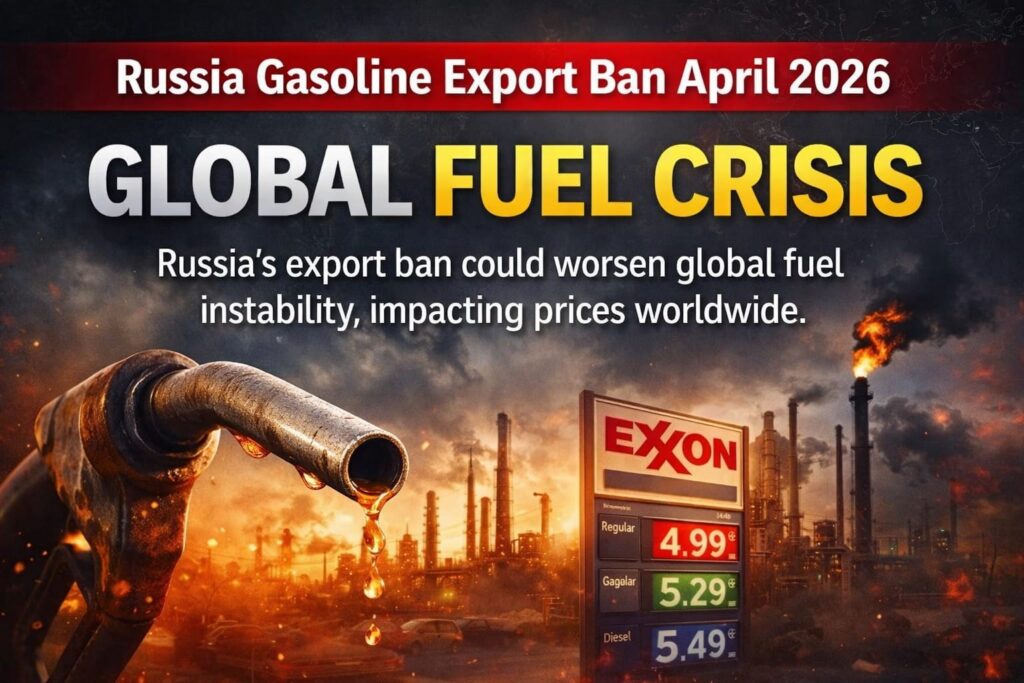
When I analyzed the Russia gasoline export ban April 2026, it became clear that this decision is directly linked to rising global fuel instability.
Russia has officially announced that it will ban gasoline (petrol) exports from April 1, 2026, mainly to protect its domestic fuel supply and control rising prices.
When I compared this situation with the recent fuel crisis developments, I noticed similar patterns of supply tightening. (Read more in my detailed analysis on fuel price cut India Iran war impact to understand how global tensions affect fuel prices.)
In my analysis, this decision is directly linked to the ongoing West Asia (Iran war) crisis, which is already causing massive volatility in global oil markets.
Key Details / Background
The Russia gasoline export ban April 2026 is not just a domestic policy move, but a signal of deeper pressure in global energy markets. Here’s what I found after analyzing multiple reports:
- 📅 Ban Start Date: April 1, 2026
- ⏳ Expected Duration: Likely till July 31, 2026
- 🎯 Main Reason: Stabilize domestic fuel prices and ensure supply
- ⚠️ Trigger Factors:
- Global oil price volatility due to Iran conflict
- Past fuel shortages inside Russia
- Rising seasonal demand
- Attacks on oil infrastructure affecting refining capacity
What surprised me was that this is not the first time Russia has taken such a step. Similar export bans were used earlier to control domestic shortages and price spikes.
In my analysis, this move also connects with broader geopolitical tensions. (I had earlier broken down this situation in Iran-Israel conflict impact on India economy which explains how global conflicts disrupt fuel markets.)
Why Russia Gasoline Export Ban April 2026 Matters Globally
From an expert perspective, this move is bigger than it looks.
Russia is one of the world’s key fuel exporters, and even a temporary ban can:
- Push global gasoline prices higher
- Disrupt supply chains in Asia and Europe
- Force countries like China and Turkey to find alternative suppliers
When I compared this with past energy crises, I noticed a clear pattern:
👉 Whenever major exporters restrict supply, markets react fast with price spikes.
Impact & Deeper Analysis
In my analysis, the Russia gasoline export ban April 2026 could tighten global fuel supply faster than expected.
🌍 Global Impact
In my analysis, the global impact could be significant:
- Oil prices already volatile due to Middle East tensions
- Supply tightening could push fuel prices higher globally
- Increased competition for limited refined fuel supplies
The Iran conflict alone has already caused oil prices to surge and threaten supply routes like the Strait of Hormuz.
According to major industry reports and global market trackers, supply disruptions linked to geopolitical tensions have historically triggered price volatility. (As reported by Bloomberg and NDTV, fuel supply restrictions often push global prices higher.)
🇮🇳 Impact on India (Important)
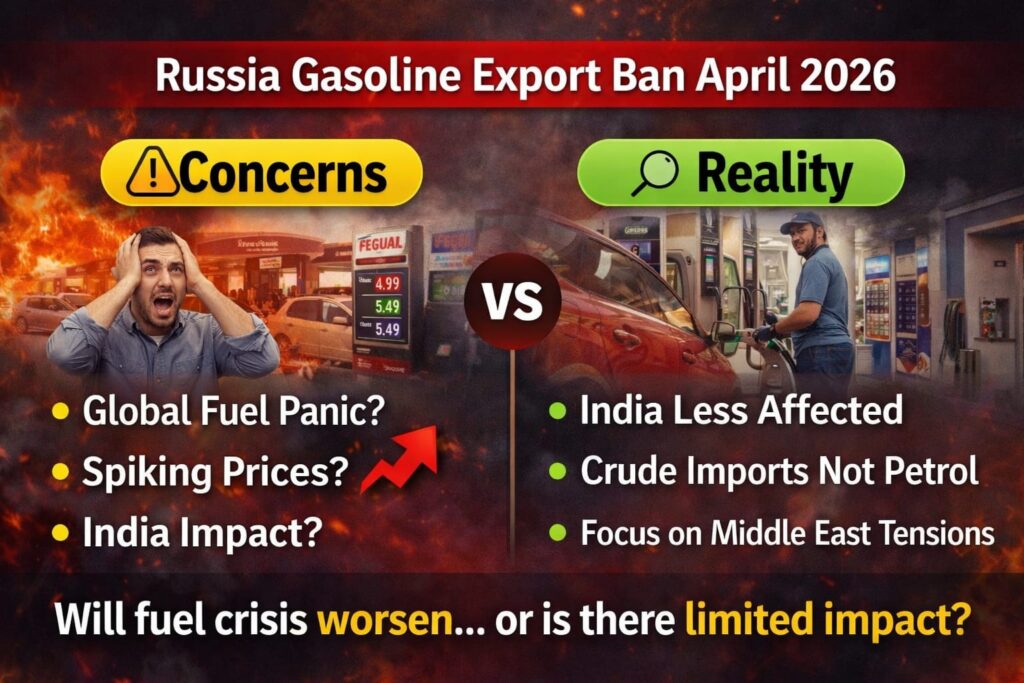
Even though the Russia gasoline export ban April 2026 may not directly hit India, indirect effects through global oil prices cannot be ignored. Now here’s what most people are worried about — Will petrol prices rise in India?
When I dug deeper, here’s what I found:
- India does NOT heavily import gasoline from Russia
- India mainly imports crude oil, not petrol
- Domestic fuel supply remains stable for now
👉 So, no immediate direct impact on India
BUT — and this is important:
- India depends on global oil prices
- If global prices rise → Indian fuel prices may eventually increase
This pattern reminds me of previous supply shocks. (In fact, I recently analyzed a similar scenario in lpg shortage in India where supply pressure created panic in the market.)
⚠️ What People Are Missing
What most people miss about the Russia gasoline export ban April 2026 is how quickly it can shift global fuel supply dynamics.
Here’s what most readers don’t notice:
- Russia is prioritizing “domestic first” strategy
- Export bans signal internal supply stress or precaution
- This could trigger chain reactions in global refining markets
What surprised me was how quickly such decisions ripple across global markets. (Similar insights have been discussed by major energy analysts and international publications.)
My Perspective / Expert View
In my expert view, this move is more defensive than aggressive.
When I tracked similar decisions in the past:
- Countries restrict exports when they fear shortages or price spikes
- It usually signals hidden pressure in supply chains
I believe this development could:
- Increase uncertainty in global fuel markets
- Push countries toward energy security strategies
- Accelerate diversification away from single suppliers
What Happens Next?
Based on current trends, here’s what I expect:
- 📈 Short-term: Global fuel prices may rise
- 🔄 Mid-term: Countries will adjust supply chains
- 🛢️ Long-term: More focus on energy independence
If the Iran conflict escalates, the situation could worsen significantly.
Conclusion
When I analyzed the Russia gasoline export ban April 2026, it became clear that this is not just a domestic policy — it’s a signal of growing stress in global energy markets.
For India, the impact is limited for now, but the bigger story is global:
👉 Fuel markets are becoming more unstable
👉 Geopolitics is driving energy decisions
👉 And price shocks may still be ahead
As I see it, the Russia gasoline export ban April 2026 could become a turning point for global fuel pricing trends if geopolitical tensions continue.
In my view, this is a warning sign — not the crisis itself yet. Overall, the Russia gasoline export ban April 2026 is a warning signal that global fuel markets may face more instability in the coming months.
FAQs
1. Why is Russia banning gasoline exports?
Russia wants to stabilize domestic fuel prices and ensure internal supply amid global market volatility.
2. When will the ban start?
The ban begins on April 1, 2026.
3. Will petrol prices rise in India?
Not immediately, but global price increases could indirectly affect India later.
4. How long will the ban last?
It is expected to continue till July 31, 2026, but may change depending on conditions.
5. Which countries will be affected most?
Countries importing Russian gasoline like China and Turkey may face supply challenges.
Also Read : More Trending News related news update on Trending News Adda.