

What Is Happening? (Overview)
When I looked at the latest forex market data, one thing became immediately clear — the Rupee Crash 2026 is not just a minor fluctuation, it’s a major economic signal.
The Rupee Crash 2026 has pushed the Indian currency to a record low of ₹92.63 against the US dollar, raising serious concerns about inflation and economic stability.
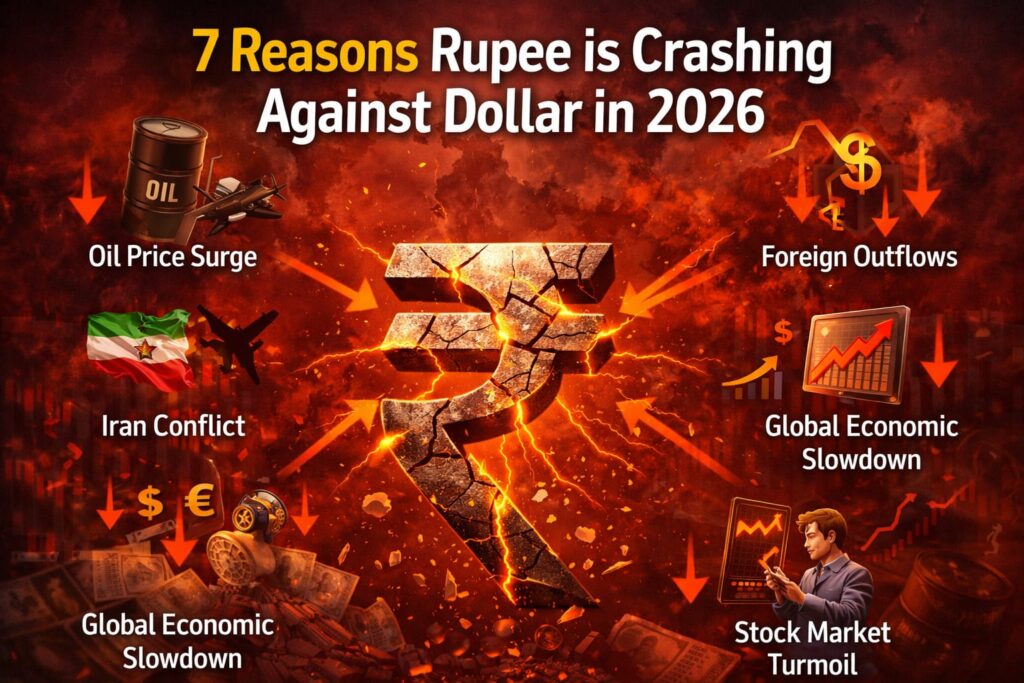
In my analysis, the Rupee Crash 2026 is being driven by a perfect storm of global and domestic factors — rising oil prices, foreign investor outflows, and geopolitical tensions.
What surprised me was how quickly the currency weakened despite relatively stable domestic fundamentals.
According to multiple reports, the rupee hit a record low of ₹92.63 against the US dollar amid strong outflows and global pressure
If you want to understand how global economic shifts are impacting India, you should also read my detailed breakdown on AI-driven job losses here
Key Details / Background
Here’s what I found after analyzing multiple reports and market updates:
- Rupee touched ₹92.63 per USD — all-time low
- Foreign investors have pulled billions of dollars from Indian markets
- Oil prices surged nearly 40% due to Middle East conflict
- India imports over 80% of its oil, making it highly vulnerable
- Strong US dollar demand and importer pressure worsened the fall
When I compared this with past currency movements, I noticed a pattern — every major rupee fall is linked to oil + global uncertainty.
Reports highlight that rising crude oil prices and Middle East tensions are major drivers behind the currency fall
Earlier reports also showed consistent pressure on the rupee due to global uncertainties
Source : The Hindu
Why This Matters
This is where most people underestimate the situation.
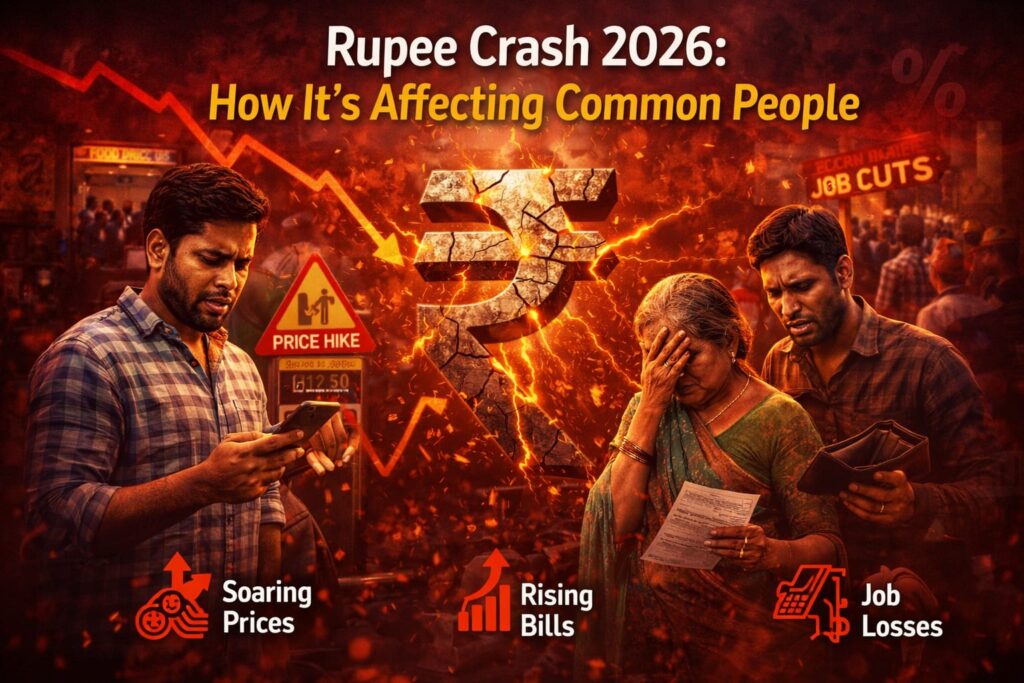
The Rupee Crash 2026 directly affects:
1. Inflation (Prices Will Rise)
A weaker rupee makes imports expensive:
- Petrol & diesel
- Electronics
- Gold & commodities
2. Your Daily Expenses
From fuel to groceries — everything becomes costlier.
3. Indian Economy
- Current account deficit widens
- Inflation risk increases
- Growth outlook weakens
Experts are already warning that the rupee could fall further if conditions worsen.
The biggest concern right now is how the Rupee Crash 2026 will directly impact everyday expenses and inflation in India.
I recently analyzed how rising gold prices are linked to currency weakness, which you can check here
Impact & Deeper Analysis
In my analysis, this is not a single-factor problem — it’s a multi-layered economic pressure.
🔥 1. Oil Shock (Biggest Trigger)
The ongoing Middle East conflict has pushed crude prices close to $100 per barrel.
India’s heavy oil dependency means:
- More dollars needed
- More pressure on rupee
This also connects directly with fuel price trends, which I explained in detail in my automobile analysis here
💸 2. Foreign Investor Outflows
Foreign investors are pulling money out of India due to global uncertainty.
When I tracked this pattern, I noticed:
- Strong US markets → money shifts to US
- Emerging markets like India suffer
💵 3. Strong US Dollar
The US dollar is strengthening globally due to:
- Interest rate expectations
- Safe-haven demand
This automatically weakens currencies like INR.
🌍 4. Geopolitical Tensions
The Iran-related conflict has created:
- Energy supply fears
- Market panic
- Currency volatility
📉 5. Trade Deficit Pressure
India imports more than it exports → needs more dollars → rupee weakens.
The market reaction has been severe, with massive wealth erosion reported during the crash
Source : NDTV
⚠️ What People Are Missing
Here are 3 things most readers ignore:
- RBI is already intervening indirectly via banks to stabilize the rupee
- Rupee sometimes weakens intentionally to protect exports
- A falling rupee is bad for imports but can benefit IT and export sectors
My Perspective / Expert View
When I analyzed the situation deeply, I don’t see this as a panic moment — but a warning signal.
When I checked how similar situations played out in the past:
- Rupee weakness is often temporary but impactful
- Recovery depends on oil prices + global stability
I believe the biggest risk right now is prolonged geopolitical tension.
If oil remains high, the rupee could stay under pressure for months.
What Happens Next?
Based on current trends, here’s what I expect:
- Rupee may test ₹93–₹95 levels if oil stays high
- RBI will likely continue market intervention
- Inflation could rise in coming months
- Stock market volatility may increase
Short-term: Uncertainty
Long-term: Depends on global stability
Analysts warn that a combination of high crude prices and rupee weakness could create a perfect storm for markets
Source : Financial Express
For more real-time market and finance updates, you can explore my latest coverage here
Conclusion
In my view, the Rupee Crash 2026 is a classic example of how global events can quickly impact a domestic economy.
This is not just about currency — it’s about:
- Inflation
- Market stability
- Economic growth
If geopolitical tensions ease, the rupee may stabilize.
But if oil prices continue rising, we could be looking at a longer period of weakness.
In my view, the Rupee Crash 2026 is not just a temporary dip but a critical signal of deeper global economic pressure.
FAQs
1. Why is the rupee falling in 2026?
Main reasons include rising oil prices, foreign investor outflows, strong US dollar, and geopolitical tensions.
2. Is rupee falling bad for India?
Yes and no — it increases import costs but can help exports.
3. Will rupee recover?
Recovery depends on oil prices, global markets, and RBI actions.
4. How does this affect common people?
Fuel prices, electronics, and daily expenses may increase.
5. Can rupee fall to 95?
Some experts believe it’s possible if current conditions continue.
Also Read : More Trending News related update on Trending News Adda.